Designing an internal AI workflow for marketing production
Designing an internal AI workflow for marketing production
Internal AI platform for a confidential home brand, connecting generation, evaluation, feedback, and approval into one workflow. The system helped the team move 3× faster and reduce production costs by up to 50%
Internal AI platform for a confidential home brand, connecting generation, evaluation, feedback, and approval into one workflow. The system helped the team move 3× faster and reduce production costs by up to 50%
ROLE
Product Designer
ROLE
Product Designer
TIMELINE
3 Months
TIMELINE
3 Months
TEAM
PM / Stakeholders, Engineers, Copywriters
TEAM
PM / Stakeholders, Engineers, Copywriters
RESPONSIBILITY
Stakeholder Research, Product Definition, Workflow Design, UI Design, Design System, Engineering Handoff
RESPONSIBILITY
Stakeholder Research, Product Definition, Workflow Design, UI Design, Design System, Engineering Handoff
Some parts of this project have been intentionally obscured due to confidentiality agreements.
Some parts of this project have been intentionally obscured due to confidentiality agreements.
Overview
Overview
A confidential home brand wanted to explore how generative AI could make marketing production faster and less expensive.
The challenge was not simply generating images. The team needed a system that could preserve context across campaign ideas, product rules, feedback, approvals, and performance review.
I led the product design work to turn scattered AI content ideas into an internal platform for generation, evaluation, and approval—starting with the CEO and CMO, then scaling toward the broader marketing team.
A confidential home brand wanted to explore how generative AI could make marketing production faster and less expensive.
The challenge was not simply generating images. The team needed a system that could preserve context across campaign ideas, product rules, feedback, approvals, and performance review.
I led the product design work to turn scattered AI content ideas into an internal platform for generation, evaluation, and approval—starting with the CEO and CMO, then scaling toward the broader marketing team.
CONTEXT
A broad AI brief without a product shape
A broad AI brief without a product shape
The client came in with many ideas around AI content: image generation, dashboards, automation, memory systems, and campaign performance tracking.
But these ideas were not yet connected into a usable workflow. The first task was to understand what the business actually needed, who the system was for, and where AI could meaningfully reduce friction.
The client came in with many ideas around AI content: image generation, dashboards, automation, memory systems, and campaign performance tracking.
But these ideas were not yet connected into a usable workflow. The first task was to understand what the business actually needed, who the system was for, and where AI could meaningfully reduce friction.
What they came with
What they came with
AI image generation for campaign assets
Dashboards to track performance
Automation for content production
Memory of past decisions and feedback
A need to scale from executive use to the marketing team
AI image generation for campaign assets
Dashboards to track performance
Automation for content production
Memory of past decisions and feedback
A need to scale from executive use to the marketing team
2.RESEARCH
Clarifying with stakeholders
Clarifying with stakeholders
The CEO and CMO were both interested in AI-assisted content production, but their needs were different.
The CMO needed a faster creative workflow for campaign assets, while the CEO needed product accuracy, comparison, and decision control.
The CEO and CMO were both interested in AI-assisted content production, but their needs were different.
The CMO needed a faster creative workflow for campaign assets, while the CEO needed product accuracy, comparison, and decision control.
CMO side
CMO side
Generate realistic AI images for campaigns
React quickly and give feedback on visuals
Create content for ads, social, and email
Use AI as a creative partner
Generate realistic AI images for campaigns
React quickly and give feedback on visuals
Create content for ads, social, and email
Use AI as a creative partner
CEO side
CEO side
Check product accuracy in generated images
Reduce ad production cost
Compare options side by side
Make final decisions quickly
Check product accuracy in generated images
Reduce ad production cost
Compare options side by side
Make final decisions quickly
Shared Loop (Both involved)
Shared Loop (Both involved)
Generate → Review → Approve / Reject
Generate → Review → Approve / Reject
Generating AI Tool Benchmark
Generating AI Tool Benchmark
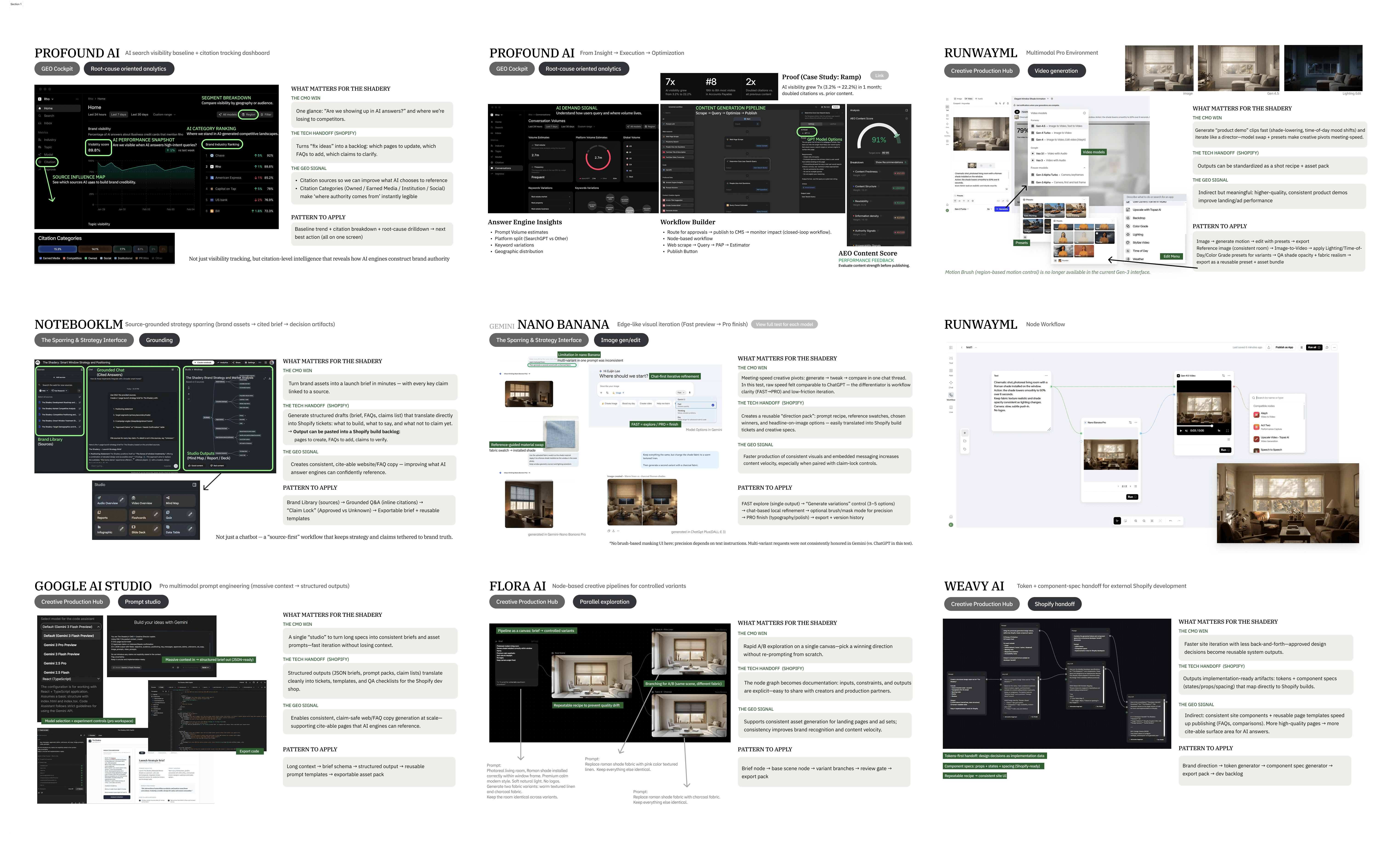
Benchmarked creative AI tools across image generation, prompt workflows, dashboards, automation, memory, and review systems.
The goal was not to copy existing tools, but to understand where current AI workflows break down: most tools were strong at generating outputs, but weak at preserving context, supporting shared decisions, and connecting feedback back into future work.
Benchmarked creative AI tools across image generation, prompt workflows, dashboards, automation, memory, and review systems.
The goal was not to copy existing tools, but to understand where current AI workflows break down: most tools were strong at generating outputs, but weak at preserving context, supporting shared decisions, and connecting feedback back into future work.
Benchmark Criteria
Benchmark Criteria
1
Generation Quality
Generation Quality
How well the tool supports realistic image or content generation.
How well the tool supports realistic image or content generation.
2
Workflow Control
Workflow Control
How much control users have over prompts, variations, editing, and iteration.
How much control users have over prompts, variations, editing, and iteration.
3
Review + Feedback
Review + Feedback
Whether the tool supports evaluation, comments, approval, or rejection.
Whether the tool supports evaluation, comments, approval, or rejection.
4
Memory + Context
Memory + Context
Whether past decisions, brand rules, and product feedback can be reused.
Whether past decisions, brand rules, and product feedback can be reused.
5
Team Scalability
Team Scalability
Whether the workflow can support multiple roles beyond one individual user.
Whether the workflow can support multiple roles beyond one individual user.
Meetings & Workshops
Meetings & Workshops
Across stakeholder meetings, the same friction kept resurfacing: repeated context, expensive photoshoots, and slow approval cycles.
Across stakeholder meetings, the same friction kept resurfacing: repeated context, expensive photoshoots, and slow approval cycles.
“We kept re-explaining the same context across generation, review, and handoff.”
“We relied on expensive, manual photoshoots to produce marketing assets.”
“It took too long to go from idea to a final approved image.”
“We kept re-explaining the same context across generation, review, and handoff.”
“We relied on expensive, manual photoshoots to produce marketing assets.”
“It took too long to go from idea to a final approved image.”

3.PROBLEM & DESIGN OBJECTIVES
3.PROBLEM & DESIGN OBJECTIVES
Too many surfaces. Not enough shared context
Too many surfaces. Not enough shared context
The work existed, but the memory of the work did not.
Creative exploration, feedback, approvals, product rules, and performance insights were scattered across different tools and conversations. This made it difficult to move quickly without losing decision context.
The work existed, but the memory of the work did not.
Creative exploration, feedback, approvals, product rules, and performance insights were scattered across different tools and conversations. This made it difficult to move quickly without losing decision context.
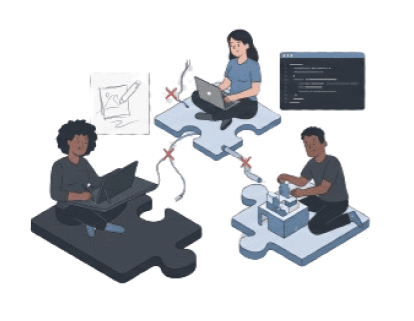
Disconnected creation
Disconnected creation
↓
↓
Reduce tool switching
Reduce tool switching
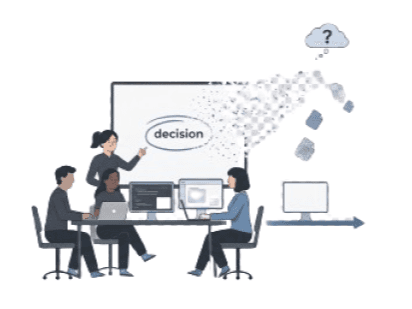
No durable memory
No durable memory
↓
↓
Make decisions reusable
Make decisions reusable

Scattered information
Scattered information
↓
↓
Give each role the right home base
Give each role the right home base
These frictions shifted the direction from building another AI generator to designing a shared workflow system.
The goal was to reduce tool switching, preserve decision context, and give each role the right space to create, review, and approve content.
These frictions shifted the direction from building another AI generator to designing a shared workflow system.
The goal was to reduce tool switching, preserve decision context, and give each role the right space to create, review, and approve content.
4.USER/OPERATOR FLOW
4.USER/OPERATOR FLOW
One shared loop between two different operators
One shared loop between two different operators
The CMO and CEO entered the workflow from different priorities, but both needed to move through the same decision loop.
The CMO and CEO entered the workflow from different priorities, but both needed to move through the same decision loop.
CMO (Marketing)
CMO (Marketing)
Gather insights > Define campaign direction > Generate content
Gather insights > Define campaign direction > Generate content
↓
↓
Generate & Review & React (Shared loop)
Generate & Review & React (Shared loop)
↓
↓
Select assets > Adapt for channels > Launch & Track performance
Select assets > Adapt for channels > Launch & Track performance
Shared Loop
Shared Loop
Generate
Generate
↓
↓
Evaluate
Evaluate
↓
↓
Approve / Revise
Approve / Revise
CEO (Product)
CEO (Product)
Gather inputs > Review context > Validate product rules
Gather inputs > Review context > Validate product rules
↓
↓
Evaluate & decide (Shared loop)
Evaluate & decide (Shared loop)
↓
↓
Log decisions > Track outcomes > Plan next steps
Log decisions > Track outcomes > Plan next steps
5.PRODUCT DEFINITION
5.PRODUCT DEFINITION
From stakeholder needs to product architecture
From stakeholder needs to product architecture
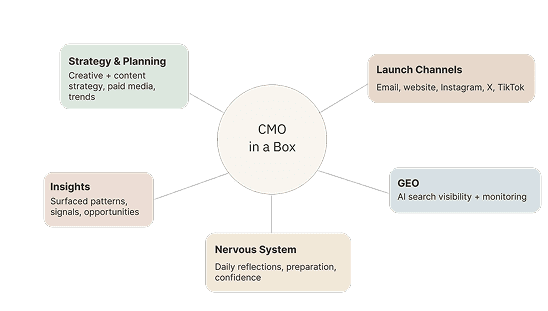
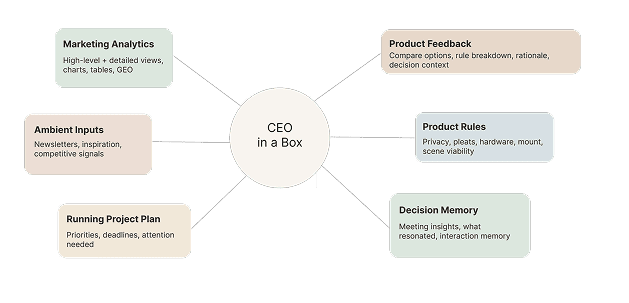
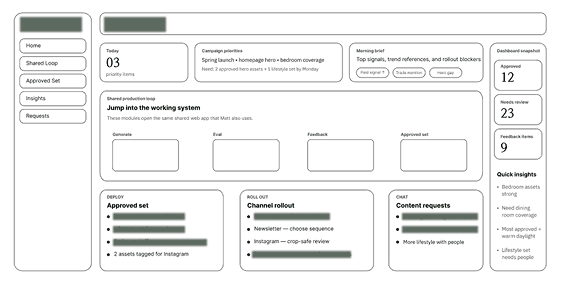
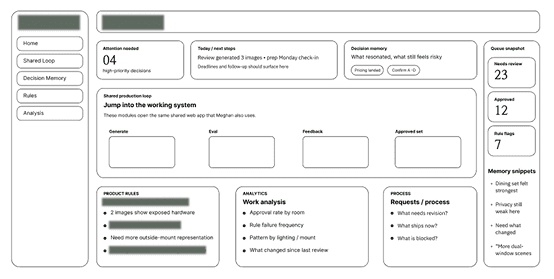
Before designing final screens, I mapped the product around two role-specific dashboards and one shared production loop.
This helped turn a broad AI exploration into a product structure that could be prototyped, reviewed with engineers, and scaled beyond the first executive users.
Before designing final screens, I mapped the product around two role-specific dashboards and one shared production loop.
This helped turn a broad AI exploration into a product structure that could be prototyped, reviewed with engineers, and scaled beyond the first executive users.
CMO’s Needs
CMO’s Needs
CEO’s Needs
CEO’s Needs
CMO’s Dashboard
CMO’s Dashboard
CEO’s Dashboard
CEO’s Dashboard
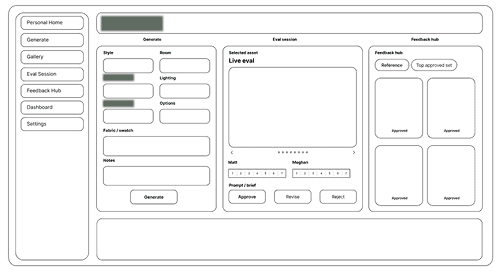
Shared System
Generate -Evaluate-Feedback
Shared System
Generate -Evaluate-Feedback
PROTOTYPE & FEEDBACK
PROTOTYPE & FEEDBACK
Testing the core loop first
Testing the core loop first
The first prototype focused on the most repeated workflow: generating assets, evaluating outputs, and collecting feedback.
Rather than designing every possible feature, I tested whether the system could support the core decision loop from first prompt to approved image.
The first prototype focused on the most repeated workflow: generating assets, evaluating outputs, and collecting feedback.
Rather than designing every possible feature, I tested whether the system could support the core decision loop from first prompt to approved image.
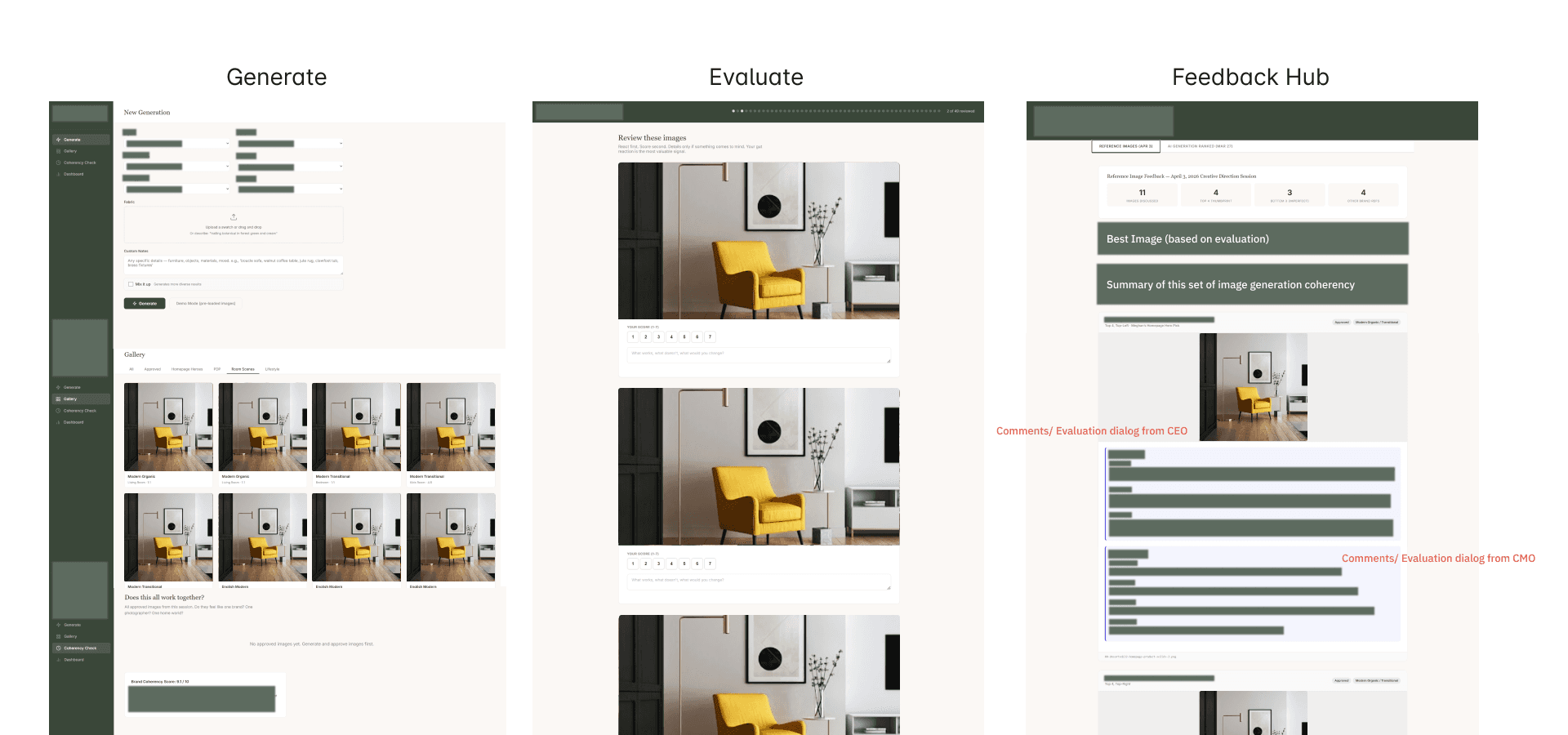
Generate
Generate
Users enter campaign inputs, product context, and visual parameters to create image options.
Users enter campaign inputs, product context, and visual parameters to create image options.
Evaluate
Evaluate
Stakeholders compare outputs, rate quality, and check whether images match product and brand expectations.
Stakeholders compare outputs, rate quality, and check whether images match product and brand expectations.
Feedback Hub
Feedback Hub
Approved images, comments, and evaluation summaries are stored so decisions can be reused later.
Approved images, comments, and evaluation summaries are stored so decisions can be reused later.
User Test / Feedback
User Test / Feedback
The first prototype validated the individual features, but also revealed a larger workflow issue.
The first prototype validated the individual features, but also revealed a larger workflow issue.
Insight
Insight
The features worked.
The workflow still didn’t.
The features worked.
The workflow still didn’t.
→
→
Product Shift
Product Shift
The next iteration focused on connecting generation, evaluation, feedback, and approvals into one shared system.
The next iteration focused on connecting generation, evaluation, feedback, and approvals into one shared system.
7.DESIGN DECISION
7.DESIGN DECISION
Customizable Dashboard, not one generic hompage
Customizable Dashboard, not one generic hompage
A single homepage would have forced the CEO and CMO into the same information structure, even though they needed different signals. Customizable dashboards let each role build a home base around their own workflow while still contributing to the same shared system.
A single homepage would have forced the CEO and CMO into the same information structure, even though they needed different signals. Customizable dashboards let each role build a home base around their own workflow while still contributing to the same shared system.
Role-specific starting points
Modular widgets
Scalable from execs to the broader team
Role-specific starting points
Role-specific starting points
Different operators can prioritize the information they need first.
Different operators can prioritize the information they need first.
Modular widgets
Modular widgets
Users can arrange dashboard blocks around their workflow.
Users can arrange dashboard blocks around their workflow.
Scalable team structure
Scalable team structure
The system can expand from executive use to the broader marketing team.
The system can expand from executive use to the broader marketing team.
One shared Loop
Generate, evaluate, review — with no friction in between
One shared Loop
Generate, evaluate, review — with no friction in between
The team did not need more disconnected AI tools. They needed one place where generation, evaluation, editing, approval, and coherence checks could happen together.
The team did not need more disconnected AI tools. They needed one place where generation, evaluation, editing, approval, and coherence checks could happen together.
Keeping the loop connected preserves context across every decision instead of losing it between tools.
Keeping the loop connected preserves context across every decision instead of losing it between tools.
1
Evaluate
Capture structured scores and comments.
Capture structured scores and comments.

2
Edit
Turn feedback into revision requests.
Turn feedback into revision requests.
3
Detail
Preserve asset context for future decisions.
Preserve asset context for future decisions.
Decisions and performance flow back into the system
Decisions and performance flow back into the system
Feedback and approvals stop being lost chat history — they become reusable context tied to the asset. Campaign performance is connected back into the same product, so future decisions inherit what was learned.
Feedback and approvals stop being lost chat history — they become reusable context tied to the asset. Campaign performance is connected back into the same product, so future decisions inherit what was learned.
Threaded feedback attached
Performance signals
Approval history as decision memory
Analysis
Keeping the loop connected preserves context across every decision instead of losing it between tools.
Keeping the loop connected preserves context across every decision instead of losing it between tools.
Feedback Hub
Comments, approvals, and evaluations stay attached to each asset, preserving the reasoning behind decisions long after the review is complete.
Comments, approvals, and evaluations stay attached to each asset, preserving the reasoning behind decisions long after the review is complete.
Generate
Generate
Create AI images from campaign direction and product context.
Create AI images from campaign direction and product context.
↓
Evaluate
Evaluate
Compare outputs and leave structured feedback.
Compare outputs and leave structured feedback.
↓
Edit
Edit
Request changes without leaving the workflow.
Request changes without leaving the workflow.
↓
Check Coherence
Check Coherence
Review whether approved assets work together as a campaign set.
Review whether approved assets work together as a campaign set.
DESIGN SYSTEM
DESIGN SYSTEM
From brand guidelines to a usable product system
From brand guidelines to a usable product system
The client’s brand language was calm, minimal, and editorial. I translated those principles into a UI system that could support dense workflows without becoming visually noisy.
The client’s brand language was calm, minimal, and editorial. I translated those principles into a UI system that could support dense workflows without becoming visually noisy.
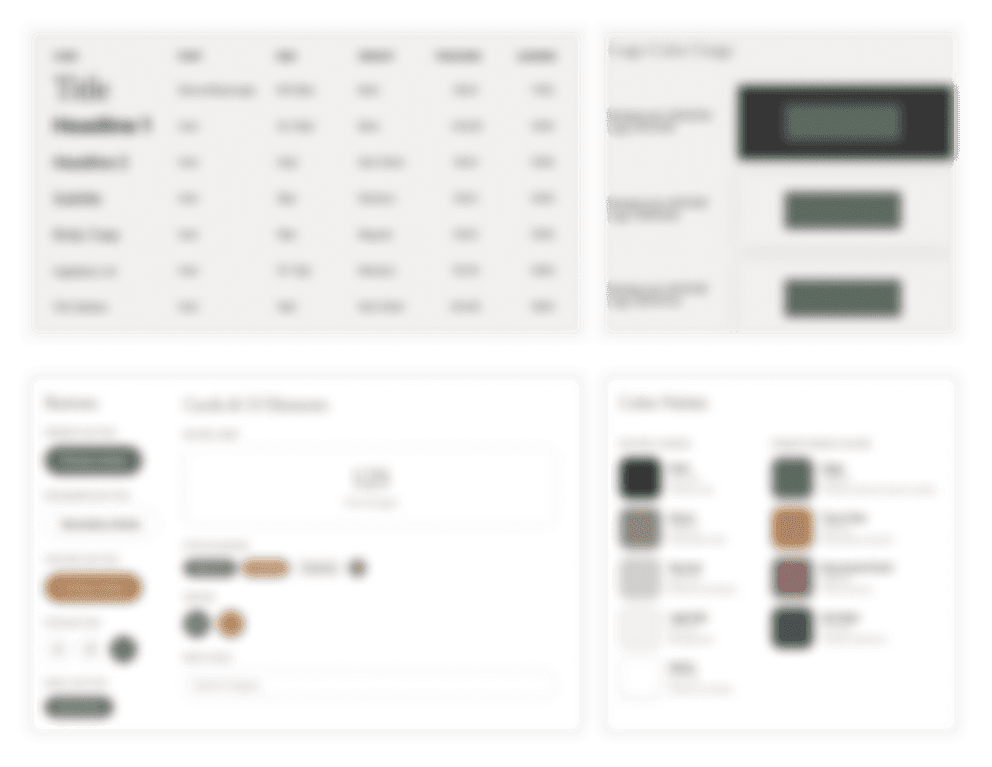
The design system translated the client’s calm, editorial brand language into a structured product interface.
Clear hierarchy, restrained colors, and repeatable UI patterns helped support dense workflows while keeping the experience readable and visually lightweight.
The design system translated the client’s calm, editorial brand language into a structured product interface.
Clear hierarchy, restrained colors, and repeatable UI patterns helped support dense workflows while keeping the experience readable and visually lightweight.
Design Interaction with After Effects & Lottie
Design Interaction with After Effects & Lottie
The AI generation process took several minutes to complete, leaving users uncertain about what was happening behind the scenes.
To reduce this uncertainty, I designed a four-step progress animation that communicates the system’s current state: Reading Product Context, Analyzing References, Generating Options, and Checking Brand Fit.
To stay aligned with the client’s minimalist visual language, I intentionally avoided decorative graphics and relied on subtle motion and existing design system components to communicate progress.
Additional interaction designs are currently being reviewed for approval before being published on this site.
The AI generation process took several minutes to complete, leaving users uncertain about what was happening behind the scenes.
To reduce this uncertainty, I designed a four-step progress animation that communicates the system’s current state: Reading Product Context, Analyzing References, Generating Options, and Checking Brand Fit.
To stay aligned with the client’s minimalist visual language, I intentionally avoided decorative graphics and relied on subtle motion and existing design system components to communicate progress.
Additional interaction designs are currently being reviewed for approval before being published on this site.
9.IMPACT
9.IMPACT
Built for executives, structured to scale
Built for executives, structured to scale
The platform was built first for CEO and CMO use, with a structure designed to expand across the wider marketing organization.
The platform was built first for CEO and CMO use, with a structure designed to expand across the wider marketing organization.
3× faster
3× faster
Faster from generation to distribution
Faster from generation to distribution
Up to 50% lower cost
Up to 50% lower cost
Compared to traditional photoshoots for campaign assets
Compared to traditional photoshoots for campaign assets
1 → many
1 → many
From executive workflow to a planned organization-wide rollout
From executive workflow to a planned organization-wide rollout
Expect more than 30% less time lost to misunderstandings and moving between tools
Expect more than 30% less time lost to misunderstandings and moving between tools
.OBSTACLES + RESPONSE
OBSTACLES + RESPONSE
What made this hard
What made this hard
The project started with an undefined scope, time pressure, and multiple stakeholder priorities. The challenge was to move quickly without turning the product into a collection of unrelated AI features.
The project started with an undefined scope, time pressure, and multiple stakeholder priorities. The challenge was to move quickly without turning the product into a collection of unrelated AI features.
Challenges
Challenges
Undefined scope
Time pressure
Multiple stakeholder priorities
Broad interest in many AI use cases
Undefined scope
Time pressure
Multiple stakeholder priorities
Broad interest in many AI use cases
How I responded
How I responded
Defined the system before designing screens
Narrowed V1 around the core loop
Used documentation to bridge design and engineering
Created repeatable workflow logic for alignment and handoff
Defined the system before designing screens
Narrowed V1 around the core loop
Used documentation to bridge design and engineering
Created repeatable workflow logic for alignment and handoff
.COLLABORATION
COLLABORATION
Keeping strategy, design, engineering, and content aligned
Keeping strategy, design, engineering, and content aligned
Because the product sat between AI, content, marketing, and engineering, collaboration was essential. Weekly reviews and documentation helped keep the system aligned as the scope evolved.
Because the product sat between AI, content, marketing, and engineering, collaboration was essential. Weekly reviews and documentation helped keep the system aligned as the scope evolved.
PM / Stakeholders
Aligned priorities, narrowed scope, and validated product direction.
Engineers
Prototyped quickly, clarified backend needs, and translated structure into a working product.
Copywriters
Improved prompts, refined tone, and shaped the brand direction for AI-generated content.
Weekly reviews and documentation kept the system aligned across product, content, and engineering decisions.
PM / Stakeholders
Aligned priorities, narrowed scope, and validated product direction.
Engineers
Prototyped quickly, clarified backend needs, and translated structure into a working product.
Copywriters
Improved prompts, refined tone, and shaped the brand direction for AI-generated content.
REFLECTION
REFLECTION
What I learned
What I learned
TAKEAWAY 01
TAKEAWAY 01
AI output needs human judgment
AI output needs human judgment
Generation was fast, but quality depended on product truth, brand context, and expert review.
Generation was fast, but quality depended on product truth, brand context, and expert review.
TAKEAWAY 02
TAKEAWAY 02
Domain experts shaped the system
Domain experts shaped the system
Copywriters helped translate brand knowledge into prompts, rules, and review criteria.
Copywriters helped translate brand knowledge into prompts, rules, and review criteria.
TAKEAWAY 03
TAKEAWAY 03
Alignment became the product layer
Alignment became the product layer
The work shifted from designing AI features to designing the shared language that made the workflow buildable.
The work shifted from designing AI features to designing the shared language that made the workflow buildable.